

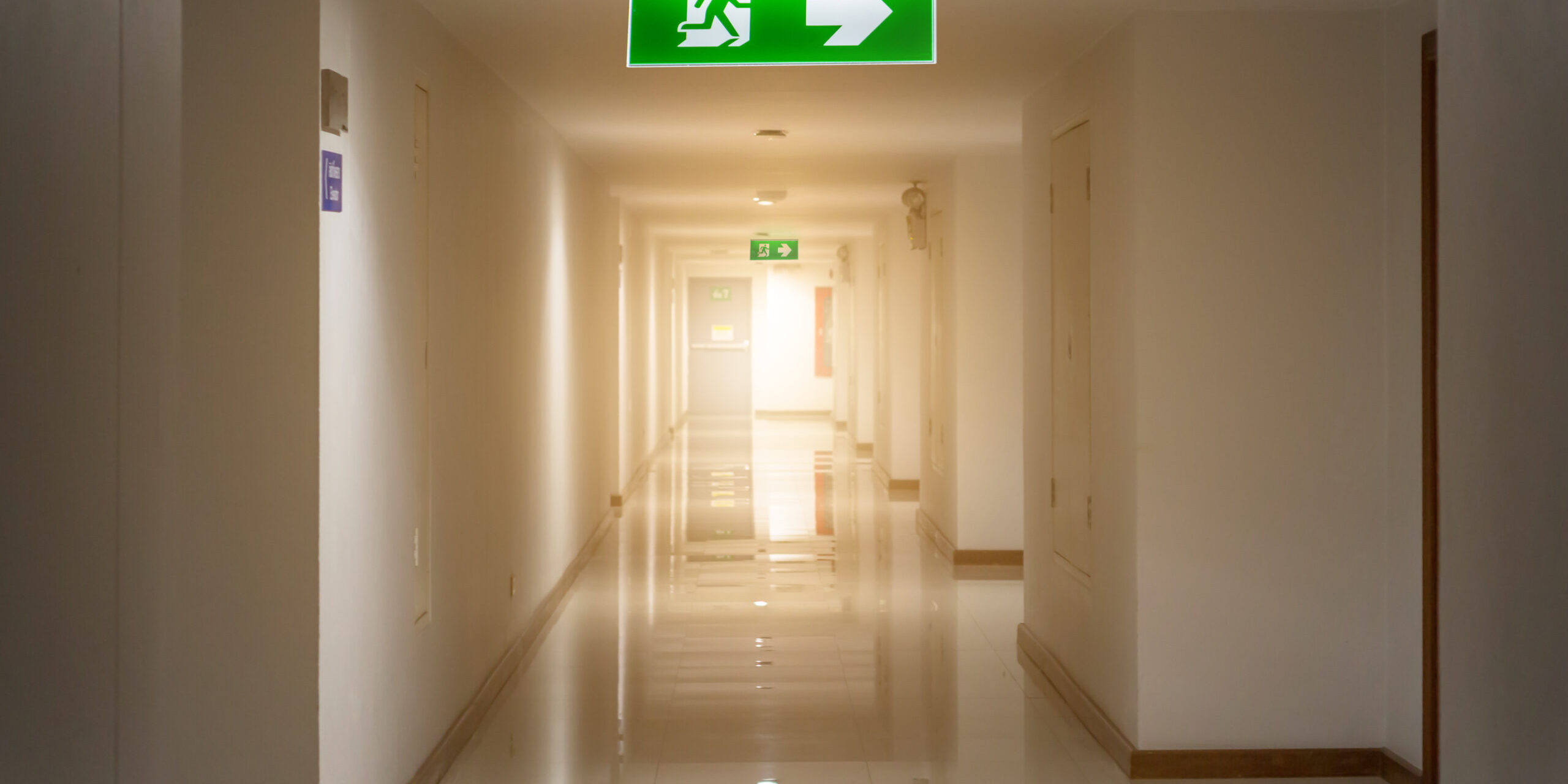
In this month’s edition of our blog, we would like to explain the current rules and regulations for Emergency Lighting and how they could affect your business in 2024.
First, what is emergency lighting?
Emergency Lighting is lighting that kicks in when the main electrical supply to the building fails or is cut due to an emergency. Under the Regulatory Reform (Fire Safety) Order 2005, all businesses must have emergency lighting installed at their premises by law. Failure to do so could result in prosecution.

What is the purpose of emergency lighting?
Emergency lighting is used to guide occupants in the building to the nearest escape route, in this event lights should stay lit for at least 1-3 hours following an outage.
This is to ensure that all occupants of the building can make their way out safely while allowing time for the emergency services to access the building if required. Once the power is restored the lights should re-charge.
Where should ELs be placed?
First, if you have had a fire risk assessment conducted, the report will detail areas in your building where they recommend ELs should be fitted.
Incorrect positioning of ELs could be fatal so it is essential that the correct lights and signage in place to clearly show the emergency route from your premises. Regulations state that you should have signage located by each EL, illuminated signs are preferred.
The key areas to cover include;
- Change in direction/floor level on the escape route
- Stairwells
- Toilets larger than 8m2
- Common areas
- Escape routes
How long must lights stay illuminated
Emergency lights must remain lit for a minimum of three hours on premises where you cannot evacuate immediately such as places where people sleep, hotels, apartment blocks, accommodation resorts, or healthcare sites (Although typically the latter should have generator backup!)
Where you can evacuate a premises rapidly the minimum illumination required is one hour although it is recommended you have these units replaced as they can degrade over time.
To ensure your lights stay lit for the required time it is recommended they are tested annually by a competent individual.
How often should ELs be maintained?
Organisations that fall under the emergency lighting test regulations must follow a service schedule to ensure their system is fully functional and operational in the event of an emergency. Testing must be completed by a competent person who is educated on how to test both manually and automatically depending on the type of lighting system you have installed.

Daily testing: This is a visual inspection of the light’s condition, check the power supply indicator is lit and that there’s no physical damage to any units.
Monthly testing: This is mandatory, lights must be tested annually to ensure all units illuminate when triggered, this is what’s called a “flick test”. Testing must be logged in the onsite log book.
Annual testing: Again this is a mandatory requirement, lights must be tested to check that they remain lit for the test duration. Depending on your premises type this will be between 1-3 hours; any units that fail must be replaced to ensure the system is to the required standard.
We hope this blog has helped you gain a better understanding of emergency lighting and the regulations in place. If your business is looking for further advice on the regulations and how you can best meet them then we can help. We offer free site surveys where we can show you what’s required to meet the requirements and keep your site safe.
If you’re interested in our services, you can contact the team at MMV on 0333 0041220 or email lewis@mmvcontracting.com , we look forward to hearing from you.
You can find further information on our emergency lighting services here: https://mmvcontracting.com/services/emergency-lighting-fire-safety-bs5266-bsi-luminaires-led-escape/